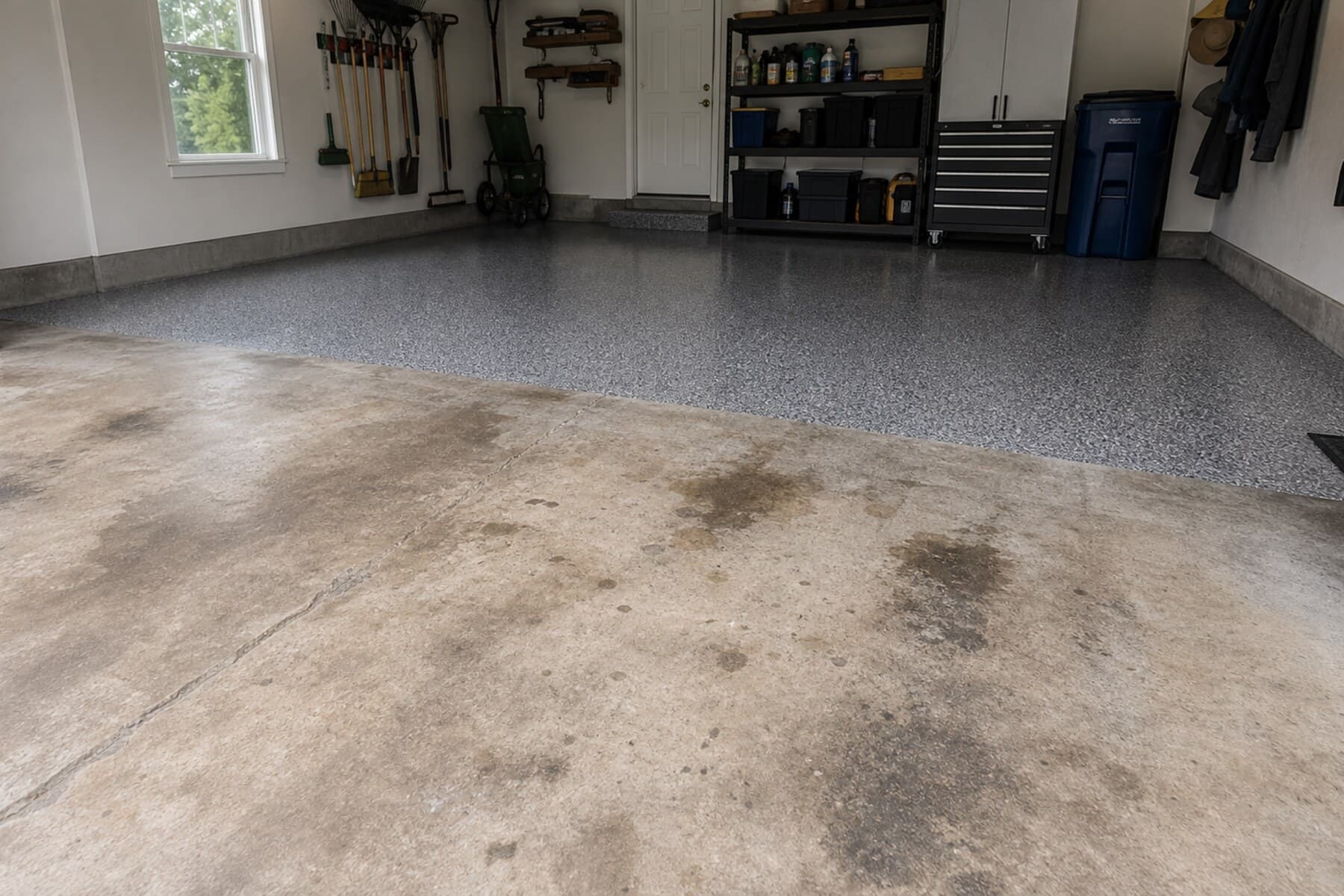
What Makes Iowa City Garage Floors Hard on Coatings?
Garage concrete takes a beating in Iowa. Road salt, snow melt, oil, hot tires, dropped tools, and daily traffic can leave the floor stained, dusty, and hard to clean. Freeze-thaw cycles can make weak concrete worse when moisture gets into the surface.
A properly installed garage floor coating can turn rough concrete into a cleaner, brighter, easier-to-maintain surface. The system still needs the right prep, repair, flake coverage, and topcoat for daily garage use.
- • Road salt and snow melt from winter driving
- • Hot tires and daily parking
- • Dusting concrete that never feels clean
- • Oil stains and household chemical spills
- • Poor prep from paint or DIY kits
Why Floor Prep Decides Whether the Coating Lasts
The coating label matters, but surface prep matters more. Concrete needs to be clean, open, and profiled before a base coat is applied. Diamond grinding removes weak surface material, opens the pores, and gives the coating a better surface to grab.
Prep also includes crack repair, pit filling, edge work, vacuuming, and checking for signs that moisture or contamination could interfere with the bond. A quote should explain the prep plan, not only the coating brand.
- • Diamond grinding instead of a quick rinse
- • Crack and pit repair before the base coat
- • Moisture awareness when concrete looks damp
- • Full-flake broadcast and protective topcoat when appropriate
What Changes After Coating
A coated floor can make a garage feel more finished, but the most practical change is cleanability. Dust, salt, and oil are easier to manage when the concrete is sealed under a durable coating system.
The final look depends on repair work, flake color, topcoat sheen, and texture.
Need a quote for your actual floor?
Concrete condition changes the best coating plan. Share the size, city, cracks, stains, and old coating details before comparing options.