What Is Polyaspartic?
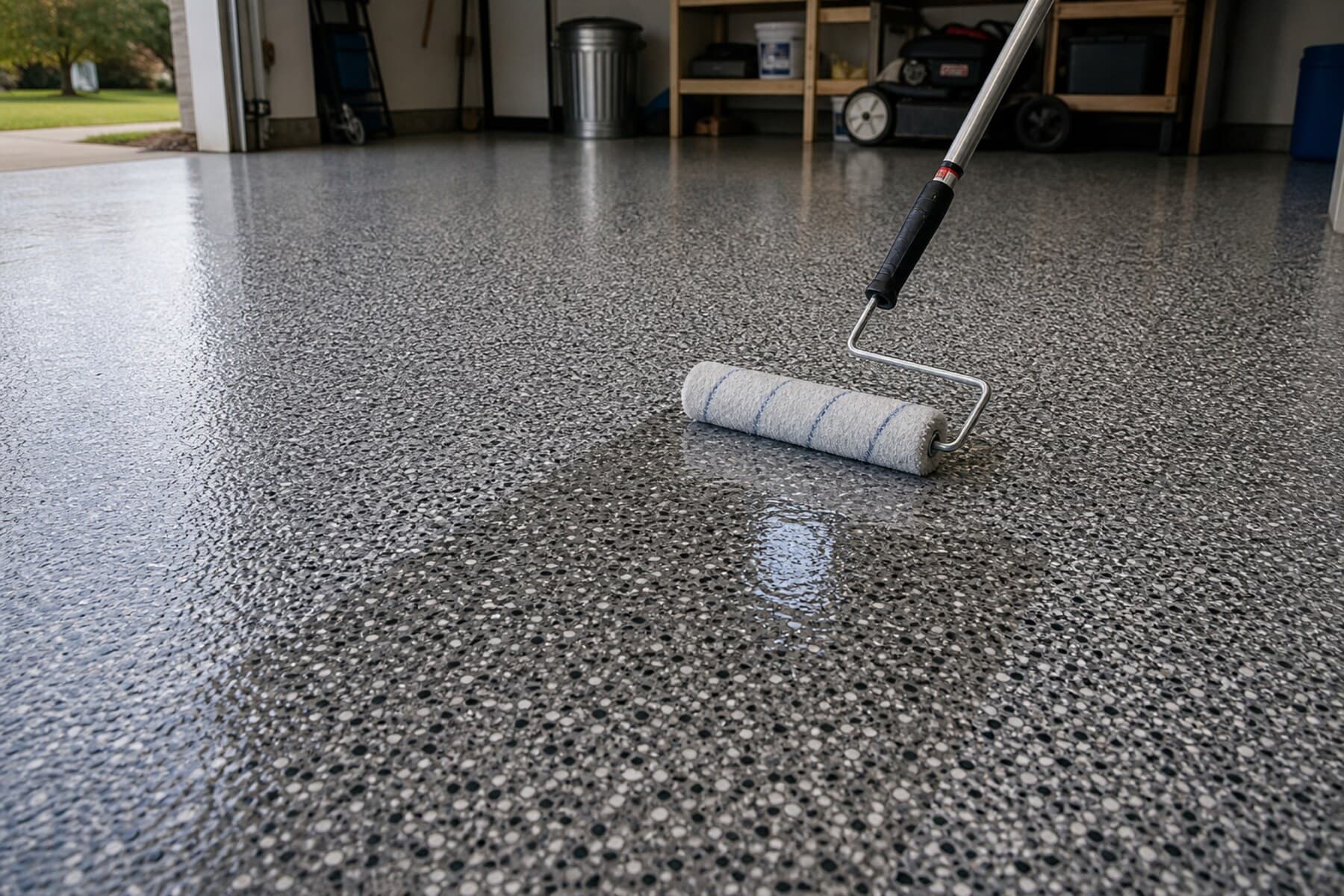
Polyaspartic is a fast-curing coating technology often used as a garage floor topcoat. It is popular for full-flake floors because it can protect the flakes while allowing a faster return to normal use.
Homeowners often compare polyaspartic with epoxy. Both can work, but they cure differently and are often used in different parts of a complete coating system.
- • Ask how the concrete will be prepared
- • Confirm whether cracks and pits are included
- • Compare full-flake and partial-flake finishes
- • Understand cure time before parking
Why Polyaspartic Is Popular for Garages
Polyaspartic garage floor coatings are popular because they can cure quickly, resist yellowing better than many basic epoxies, and provide a durable clear topcoat over decorative flakes.
For Iowa garages, that means a cleaner floor surface that can handle daily parking, snow melt, road salt, and regular sweeping or rinsing.
Cure Time and Return-to-Use
One reason homeowners ask about one day garage floor coatings in Iowa City is return-to-use. Some polyaspartic systems can be ready faster than traditional epoxy systems.
Actual timing depends on concrete condition, repairs, temperature, humidity, and the products used. A quote should state when you can walk on the floor and when you can park.
- • Ask how the concrete will be prepared
- • Confirm whether cracks and pits are included
- • Compare full-flake and partial-flake finishes
- • Understand cure time before parking
Iowa Winter and Road Salt Relevance
Road salt and snow melt are hard on bare concrete. A properly prepared polyaspartic flake system gives the floor a sealed surface that is easier to rinse clean during winter.
The coating still needs maintenance. Salt should not sit on the floor all season, and grit should be swept so it does not act like sandpaper under tires.
Full Flake Systems
A full-flake system uses decorative chips broadcast into the wet base coat until the floor is covered. After scraping and vacuuming loose flakes, a clear topcoat seals the surface.
The result is a practical garage finish that hides dust and small debris better than a plain solid color.
- • Ask how the concrete will be prepared
- • Confirm whether cracks and pits are included
- • Compare full-flake and partial-flake finishes
- • Understand cure time before parking
Polyaspartic vs Epoxy
Polyaspartic is often chosen for faster cure and UV stability. Epoxy may still be a good base coat or budget-aware option when cure time is less urgent.
The best choice depends on your slab, schedule, budget, and expectations. The prep plan should be clear either way.
| Factor | Epoxy | Polyaspartic |
|---|---|---|
| Cure time | Often slower, especially in cool weather | Often faster return-to-use |
| UV stability | Can amber in direct UV without the right topcoat | Usually stronger UV stability |
| Cost | Often lower material cost | Often higher material cost |
| Durability | Good when installed over properly prepared concrete | Strong chemical and abrasion resistance |
| Install window | More temperature sensitive | Works across a wider install window |
| Best use case | Budget-aware garages and interior concrete | Fast-turnaround full-flake garage systems |
Need a quote for your actual floor?
Concrete condition changes the best coating plan. Share the size, city, cracks, stains, and old coating details before comparing options.